TCC GD-PI-WAT Journey
Admissions : To be announced in September 2026

presents
The Management Development Programme (MDP)
TCC’s Legendary GD-PI-WAT Training
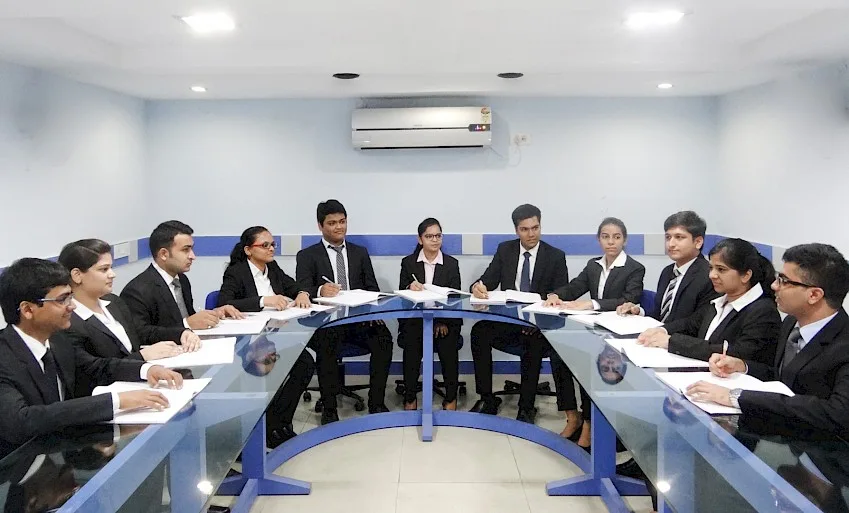
The Intellectual Finishing School
Where Ordinary Ends and Extraordinary Begins
Customisation & Personalisation
Unique, Unmatched & Beyond Comparison
- Onset Evaluation
- Written Ability Test
- Individual feedback
- Personal Interview
- Individual feedback & playback
- Analysis of academic, professional, extracurricular, work and general facets
- Absolute benchmarking
- Relative benchmarking
- One-to-One Planning
- Personalisation at its best
- Customisation at its best
- Conducted, individually, for every student
- Customisation of 'Plan of Action' for every student
- In accordance with the background, competence, interests, and aspirations of the particular student
- Getting ‘Future Ready’

- Research & Development
- Customisation of 'Research Projects’ for every student
- In accordance with the background, competence, interests, and aspirations of the particular student
- Extensive Research
- Project Report Development
- Submission, Analysis, Feedback for every student
- One-to-One Evaluation & Feedback
- Once more, Personalisation at its best
- Once more, Customisation at its best
- For Communication Sessions
- For Psychometric Testing
- For Group Discussions, Group Activity, Group Exercise, Group Task
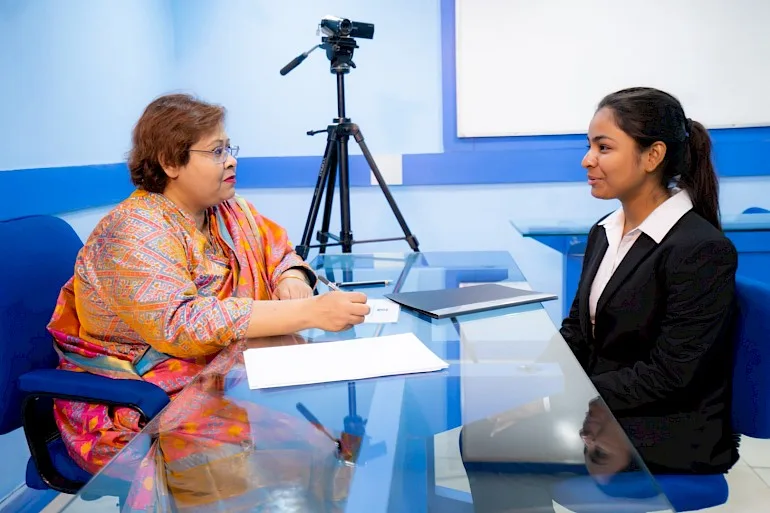
- For Personal Interviews
- For Group Interview
- For Written Ability Tests (WATs)
- For Forms, SOP, LOR, CV, Visume
- For Business School selection
A 360-degree quest manifests in personalised & customised
evaluation, analysis, benchmarking, feedback, and planning.
Hard Skills
Conceptual Phase
- Form-Filling Concepts
- Frequently Asked Questions
- Customised Questions
- Academic, Professional, Extracurricular, Work, and General facets
- Resume / Curriculum Vitae (CV)
- Statement of Purpose (SOP)
- Letter of Recommendation (LOR)
- Essay Writing Concepts / Written Ability Test (WAT) Concepts
- Topic Interpretation
- Thought Organisation
- Template Structuring
- ‘Lead-in’ Strategy
- Essay-language mode
- General Knowledge Concepts
- General
- Particular
- Case Study Concepts
- Fundamentals of Case Analysis
- Methodology
- SWOT analysis
- Macro analysis
- Micro analysis
- Innovation
- Solution
- Management Concepts
- Fundamentals
- Basic Elements
- Planning
- Organising
- Leading
- Controlling
- Staffing
- Staff Functions
- Line Functions
- Functional Areas
Domain Knowledge & Technical Expertise
Hard Skills
Conceptual Phase
Human Resource Concepts
Personnel Management
Human Resource Management
Industrial Relations
Human Resource Development
Organisational Development
Finance Concepts
Accounting Concepts
Books of Accounts
Depreciation, Inventory
Working Capital
Capital Budgeting
Cash Flow, Fund Flow
Ratio Analysis
Economics Concepts
Fundamentals
Microeconomics
Macroeconomics
Marketing Concepts
The Paradigm Shifts, The Trends
Fundamentals
The Process of Marketing
Marketing Research
Customer-driven Engineering
Distribution
Promotion
Selling
Customer Support
Services
Segmenting, Targeting, Positioning
Leadership Concepts
Initiative
Planning
Decision Making
Problem Solving
Time Management
Activity Management
People Management
Domain Knowledge & Technical Expertise
Soft Skills
Conceptual Phase
Communication Concepts
Verbal
Presentation Skills
Oratory skills
Verbal ability
Lexical cognisance
Ratiocinative skills
Speech edifice
Non-verbal
Communication sans words
Body Language, Eye Contact, and Listening
Mannerisms and Expressions
Personality, Attitude, and Behaviour
Esprit-de-corps
Leadership qualities
Decision making
Problem solving
Alacrity
Kinesics
- Public Speaking / Extempore Concepts
- Public Speaking techniques
- Extempore techniques
- General topics
- Abstract topics
- Interpretation Strategy
- Implementation Strategy
- Parlance Strategy
- Managing Glossophobia
- Group Discussion Concepts
- The Essence of a GD
- GD - a Science and an Art
- Fundamentals
- Testing Grounds
- Initiation and Innovation
- Content
- Verbal Communication
- Non-verbal Communication
- Group Behaviour
- Concluding
- Summarising - Verbal
- Summarising - Written
Attitudinal & Behavioural Competencies
Soft Skills
Conceptual Phase
Group Activity / Group Exercise / Group Task Concepts
Fundamentals
Testing Grounds
Myriad Possibilities
Group Chemistry
Group Interview Concepts
Fundamentals
Testing Grounds
Many-to-Many Mapping
Handling the Aberration
Marginal Features
Focus Areas

Personal Interview Concepts
The Essence of an Interview
Interview - a Science and an Art
Fundamentals
Testing Grounds
The Process
Self Knowledge
Self Awareness
Past Knowledge
Future Knowledge
Incidental Knowledge
Handling of Frequently Asked Questions
Handling of Tricky Situations
Questions to ponder on
Strategising Interviews
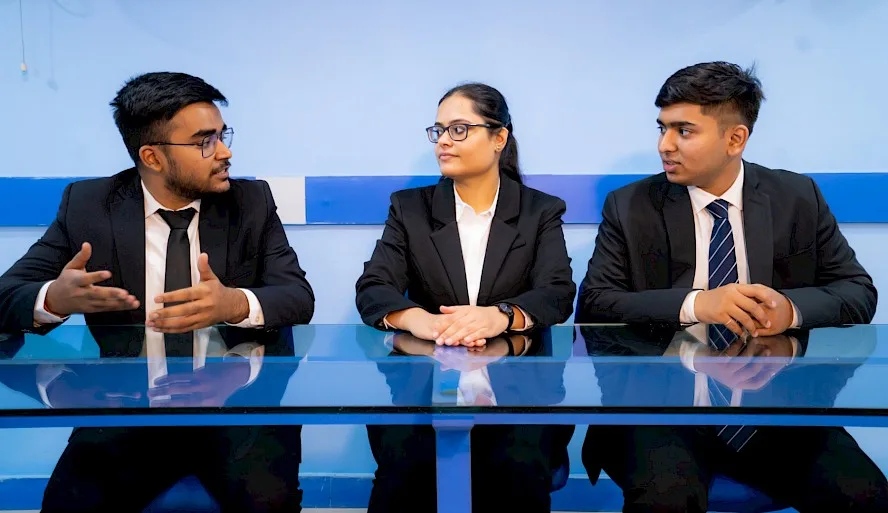
Attitudinal & Behavioural Competencies
Applications
Practical Phase
Communication Sessions
6 sessions per student
Participation in Public speaking
Participation in Extempore
Participation in Presentation
Participation in Debate
Participation in Creative Writing
Diverse Topics
Diverse Situations
Presentation Skills
Oratory Skills
Performance Attitude
Stage Kinesics
Individual evaluation, analysis, and feedback
Essay Writing / Written Ability Test (WAT)
10 sessions per student
Sessions covering myriad topics
Individual evaluation, analysis, and feedback
Topic feedback
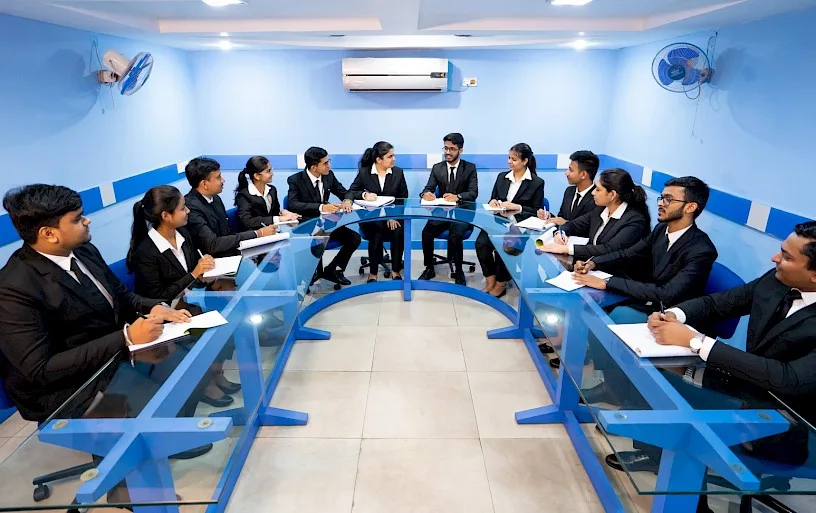
Psychometric Testing
2 sessions per student
Word Relationship Test
Situational Relationship Test
Thematic Apperception Test
Thought-buster Session
Mind Mapping
Individual evaluation, analysis, and feedback
Form Filling
Business School forms
Resume / Curriculum Vitae (CV)
Statement of Purpose (SOP)
Letter of Recommendation (LOR)
Individual evaluation, analysis, and feedback
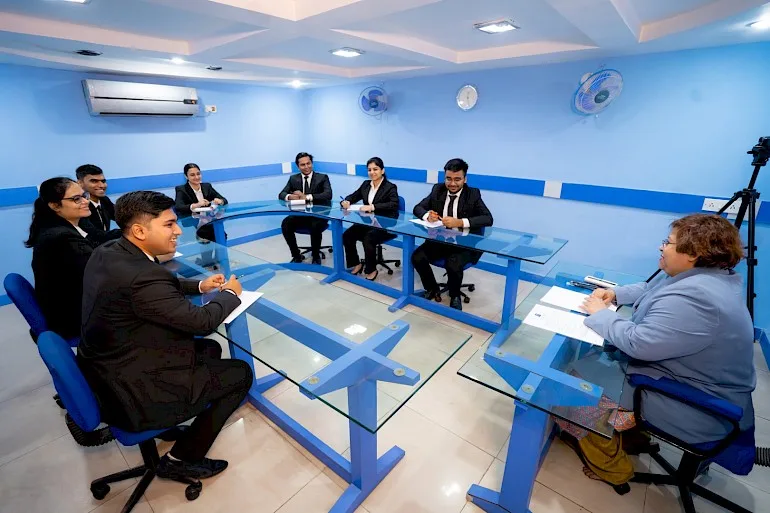
Concepts + Practical + Brainstorming = Crystal Clear Concepts
Applications
Practical Phase
- Group Discussions
- 7 sessions per student
- Sessions covering myriad topics
- Social, Political, Economic issues
- Abstract Scenarios
- Case Studies
- Audio-visual Sessions
- Group Activities
- Group Exercises
- Group Tasks
- Individual evaluation, analysis, and feedback
- Topic feedback
- Group Interview
- 1 session per student
- Evaluation of Hard Skills and Soft Skills in a group setup
- Individual evaluation, analysis, and feedback
- Absolute Benchmarking
- Relative Benchmarking
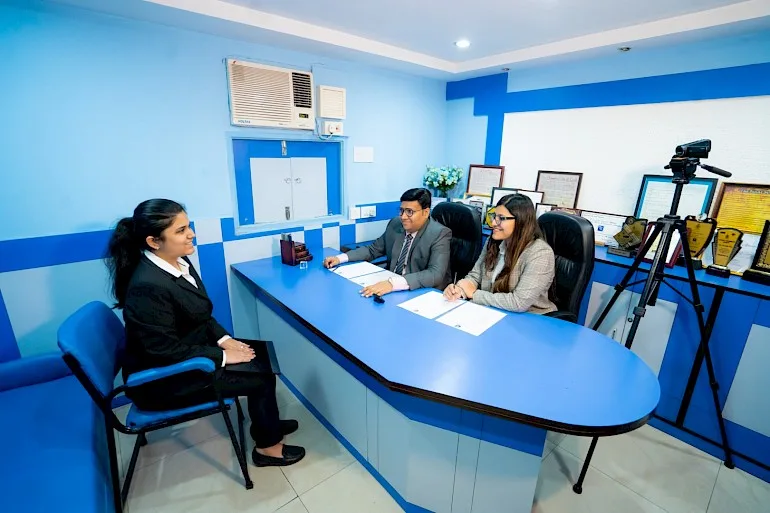
Personal Interviews
6 sessions per student
Covering the entire spectrum
Evaluation of Hard Skills
Evaluation of Soft Skills
Academic facets
Professional facets
Extra-curricular facets
Work facets
General facets
Panellists -
Corporate recruiters
Campus recruiters
HR managers
Functional experts
Alumni from top business schools including IIMs and XLRI
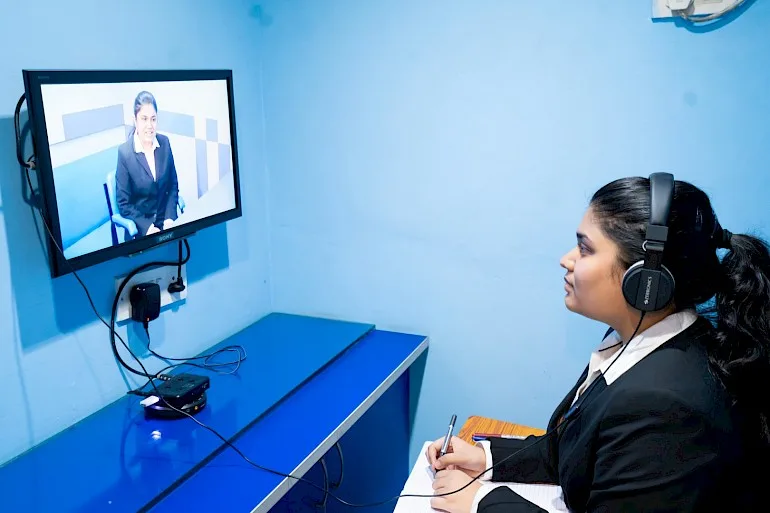
Interviews to be video recorded
Evaluation, Analysis, Feedback, and Playback of the interviews
Concepts + Practical + Brainstorming = Crystal Clear Concepts
Evaluation Components
Business Schools' Expectations
Essay Writing / Written Ability Test (WAT)
A test of topic interpretation, thought organisation, language, presentation, and written communication skills.
Extempore
A test of alacrity, topic interpretation, thought organisation, language, presentation, ratiocination, verbal and non-verbal communication skills.
Psychometric Testing
A test of a candidate's attitude, consistency, and emotional quotient.
Group Discussion (GD)
A topic-based discussion amongst a number of participants evaluating knowledge, skills, and attitude. A test of initiative, innovation, group behaviour, verbal and non-verbal communication skills.
Group Activity / Group Exercise / Group Task
An activity undertaken by a group of candidates towards an objective – explicit or otherwise. A test of initiative, innovation, alacrity, and group behaviour.
Case Study / Case Discussion (CD)
A social / political / business / abstract situation analysed by candidates in a group discussion set-up. Test of problem solving skills on the face of uncertainty, ambiguity, and information constraint.
Personal Interview (PI)
A one-to-one or a many-to-one set-up. A panel comprising one or more members evaluate(s) the candidate's Hard and Soft skills. A test of Academic, Professional, Extracurricular, and Work-related competence. A veritable 360-degree appraisal.
Group Interview (GI)
A one-to-many or a many-to-many set-up. A panel comprising one or more members evaluate(s) multiple candidates in tandem. A test of Hard and Soft skills in a group set-up.
A cerebral, personalised, customised, conceptualised, theoretical, and practical training
will ensure surmounting the seemingly insurmountable barriers.
TRANSCENDENT ACHIEVEMENTS
GD-PI-WAT Results : Monumental
● Best results in the country, by a long margin, since 2001 (inception).
● Also, since 2004-05
- IIM(s) call-conversion has been above 90 %
- XLRI call-conversion has been above 80 %
- Overall call-conversion (all business schools included) has been above 90 %
Career Results : Matchless
Thanks to The TCC Journey (CAT and GD-PI-WAT trainings),
Till date more than 200 TCC students have got the best placement in their respective business school.
TCC students have got the best all India placements, all business schools combined, for 4 consecutive years.
No other institute in the entire country has been able to match this feat.